
Zelensky Says Ukraine Struck Two Oil Refineries Deep Inside Russia
Kyiv frames the long-range strikes as an effort to cut the energy revenues funding Moscow's war effort
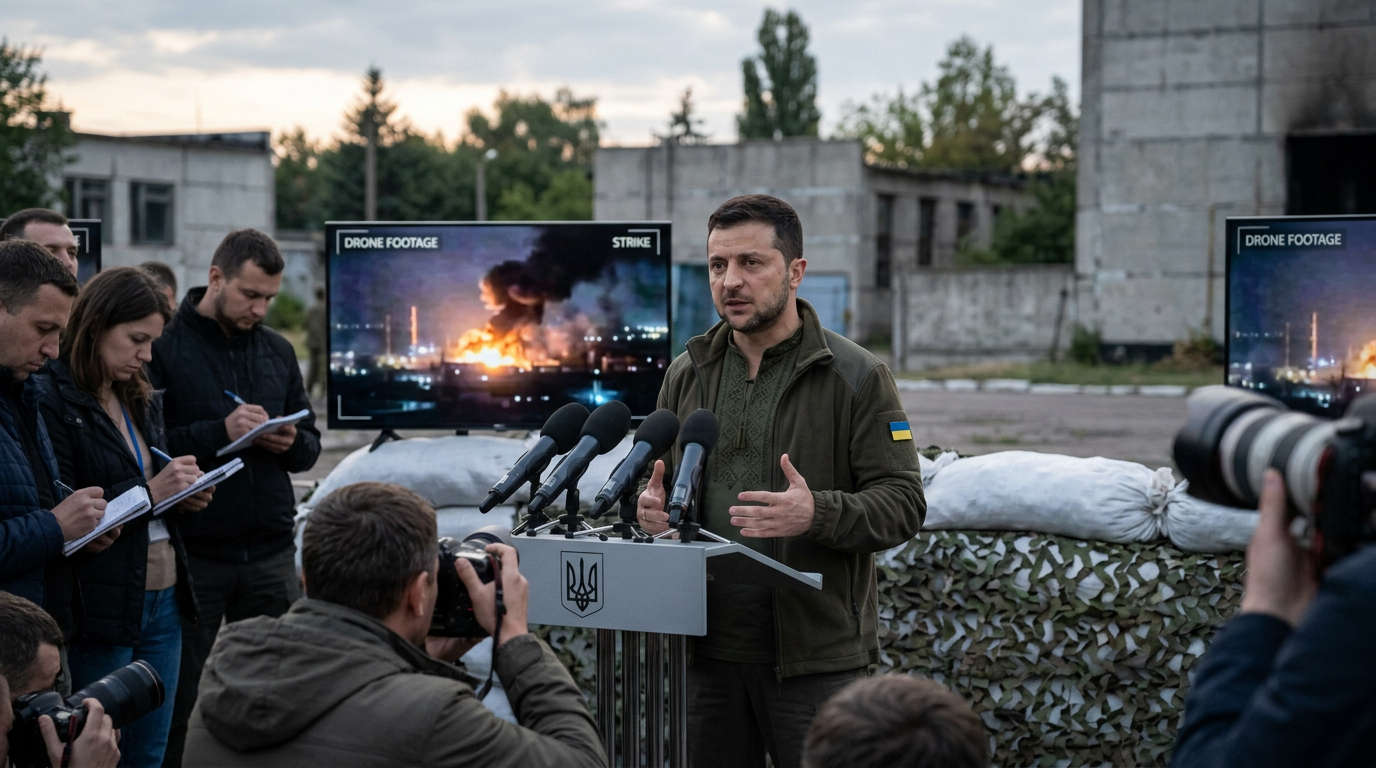
Ukrainian President Volodymyr Zelensky said Ukrainian forces struck two oil refineries deep inside Russian territory, framing the operation as part of a broader effort to reduce the export earnings that Moscow has used to fund its war against Ukraine.
According to the BBC's reporting, Zelensky said the strikes were intended to limit revenues Russia "used to finance" the war. The scale of the damage at either facility, and the operational status of the plants after the attacks, could not be independently verified at the time of publication.
Main Story
Strikes on refineries far from the front line have become one of the most visible features of Ukraine's long-range campaign. Kyiv argues that oil processing and export infrastructure is a legitimate military-economic target because hydrocarbon revenues underpin Russian defence spending. Moscow has repeatedly described such attacks as strikes on civilian infrastructure.
Ukrainian officials typically announce these operations without disclosing the weapons used, the units involved or the precise routes flown, citing operational security. Russian regional authorities and the federal aviation and emergency agencies often issue brief statements referring to drone debris, fires at industrial sites or temporary airport restrictions, without confirming damage assessments.
That pattern has produced a persistent verification gap. In many previous cases, the full impact on refining throughput only became clear days or weeks later through satellite imagery analysis, shipping and pipeline data, or industry reporting on maintenance and export volumes. W24NN has not independently confirmed the identity of the two refineries referenced in the latest announcement or the duration of any shutdown.
Background
Ukraine's ability to reach targets hundreds of kilometres inside Russia has expanded substantially since the early phase of the full-scale invasion that began in February 2022. Long-range one-way attack drones developed domestically have allowed Kyiv to hit facilities in Russia's Volga region, the Urals and areas around the Baltic and Black Sea ports.
The strategy carries a wider set of consequences. Reduced refining capacity can push Russia to export more crude and less refined product, affect domestic fuel supply in some regions, and periodically influence global diesel and gasoline pricing. Western governments have publicly urged Kyiv to avoid actions that destabilise global energy markets, while also acknowledging Ukraine's right to defend itself.
Russia, for its part, has continued long-range strikes on Ukrainian power generation, gas production and transport infrastructure, with attacks intensifying during heating seasons. Each side describes the other's campaign as an attempt to break civilian and industrial resilience rather than achieve battlefield gains.
Timeline
- February 2022: Russia launches its full-scale invasion of Ukraine; Ukrainian long-range strikes are initially limited in range and frequency.
- 2023: Ukraine expands drone and naval drone operations against targets in Russia and occupied Crimea.
- 2024: Kyiv begins a sustained campaign against Russian oil refineries and fuel depots using domestically produced long-range drones.
- 2025: Strikes reach deeper into Russian territory, repeatedly disrupting refining and export operations.
- 6 August 2026: Zelensky says Ukrainian forces struck two oil refineries deep inside Russia, citing the goal of cutting war revenues.
Key Facts
- Ukraine's president publicly claimed strikes on two Russian oil refineries located deep inside Russian territory.
- The stated objective was to limit revenues Moscow has used to finance its war.
- The BBC reported the claim; damage assessments were not independently verified at the time of publication.
- Russian authorities generally confirm fires or drone activity without detailing damage to refining capacity.
Latest Developments
As of publication, W24NN has not been able to match the announcement against detailed, independently sourced damage reports from multiple trusted outlets. Readers should treat specific figures circulating on social media — including claims about output losses or casualty numbers — with caution until confirmed by wire services, official statements or verified imagery analysis.
Market reaction to individual refinery strikes has historically been modest unless export terminals or unusually large processing units are affected. Any measurable effect on Russian crude exports or product flows would typically appear in subsequent weekly shipping and refinery-run data.
What's Next
Attention will turn to three questions: whether Russian regional officials confirm damage at specific plants, whether repair timelines point to a prolonged loss of capacity, and whether Moscow responds with a new wave of strikes on Ukrainian energy infrastructure. Diplomatic reaction from Washington and European capitals may also indicate whether allies view deep-strike operations as escalatory or as an accepted element of Ukraine's defence.
FAQ
See the questions and answers accompanying this report for further context on why refineries are targeted and how such claims are verified.
Conclusion
The reported strikes fit an established Ukrainian strategy of targeting the economic machinery behind Russia's war rather than only front-line forces. The claim is on the record from Ukraine's president, but the operational consequences remain unverified and will only become clear as independent assessments emerge.